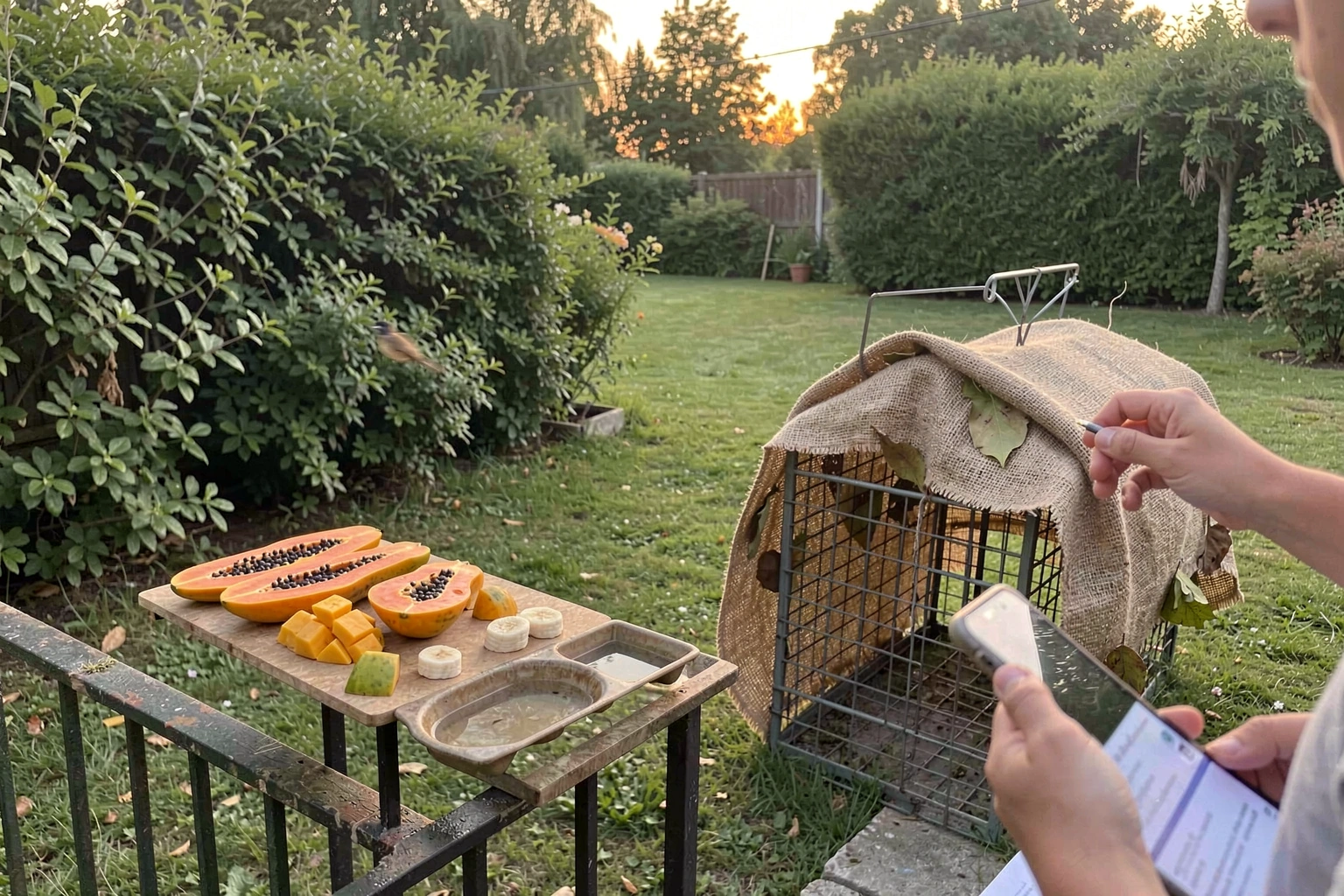
If there's a bird outside you need to catch, the first thing to figure out is what kind of situation you're actually dealing with. Is it your pet bird that just escaped? A wild bird that looks injured? Or just a wild bird minding its own business? Your answer changes everything about what you should do next. This guide walks you through the full decision process so you can act quickly and safely today, without accidentally making things worse.
How to Catch a Bird Outside Safely Step by Step
Clara Hayes
22 Mar 2026
Should you catch it yourself or call for help?
Before you move a single step toward that bird, spend 60 seconds answering these questions. They'll tell you whether this is a DIY situation or one where you need to pick up the phone first.
- Is it your pet bird (parrot, cockatiel, parakeet, finch, etc.)? If yes, you should attempt retrieval using the luring methods below.
- Is it a wild bird that appears healthy and uninjured? Stop. Leave it alone. Capturing healthy wild birds is illegal under the Migratory Bird Treaty Act without a federal permit.
- Is it a wild bird showing signs of injury or distress? Contact a licensed wildlife rehabilitator or your local animal control before you touch it. Most rehab centers have a hotline.
- Is it a large bird with sharp talons or a hooked beak (hawk, owl, heron, pelican)? Do not attempt to grab it yourself. Call a licensed wildlife rehabilitator or local animal control immediately.
- Is it possibly a neighbor's escaped pet? Try to contain it safely and post on local community boards while keeping it secure.
A note on the 'one-hour rule': if a wild bird has been sitting in the same spot on the ground for more than an hour and isn't flying away when you approach, that's a reliable signal something is wrong. Healthy wild birds do not let people walk up to them. That bird likely needs professional help, not a DIY capture attempt.
Ethics, the law, and your safety before you do anything
The Migratory Bird Treaty Act (16 U.S.C. § 703) makes it unlawful without authorization to pursue, hunt, trap, capture, or attempt to capture the vast majority of wild bird species in the United States. The definition of 'take' under the MBTA is broad and includes simply chasing or attempting to trap a bird. This covers most songbirds, shorebirds, raptors, and waterfowl. The bottom line: if it's a wild bird and it's not injured, walk away. If it is injured, call a rehabilitator and follow their instructions rather than acting unilaterally.
If you're handling any lost bird (including to help it), protect yourself. The CDC recommends wearing gloves and, when within about six feet of a sick or dead wild bird, treating the situation as a potential HPAI (avian flu) exposure risk. Wear disposable gloves, avoid touching your face, wash your hands thoroughly with soap and water afterward, and change your clothes if you had close contact. This isn't paranoia, it's just good practice any time you're handling wildlife.
On the stress side: chasing a bird, whether it's your pet or a wild bird, can be genuinely dangerous to the bird. The Ohio Wildlife Center explicitly warns that prolonged pursuit can cause 'stress myopathy,' a fatal condition that can occur in birds chased for extended periods. The rule is simple: if your approach isn't working after a few calm attempts, stop and switch strategies. More chasing is not the answer.
The safest ways to actually capture a bird outdoors
Whether you're dealing with an escaped pet or a bird that needs emergency help, these are the non-injurious methods that actually work. The goal is always to let the bird come to you or to guide it gently, not to grab at it or chase it into exhaustion.
The towel method
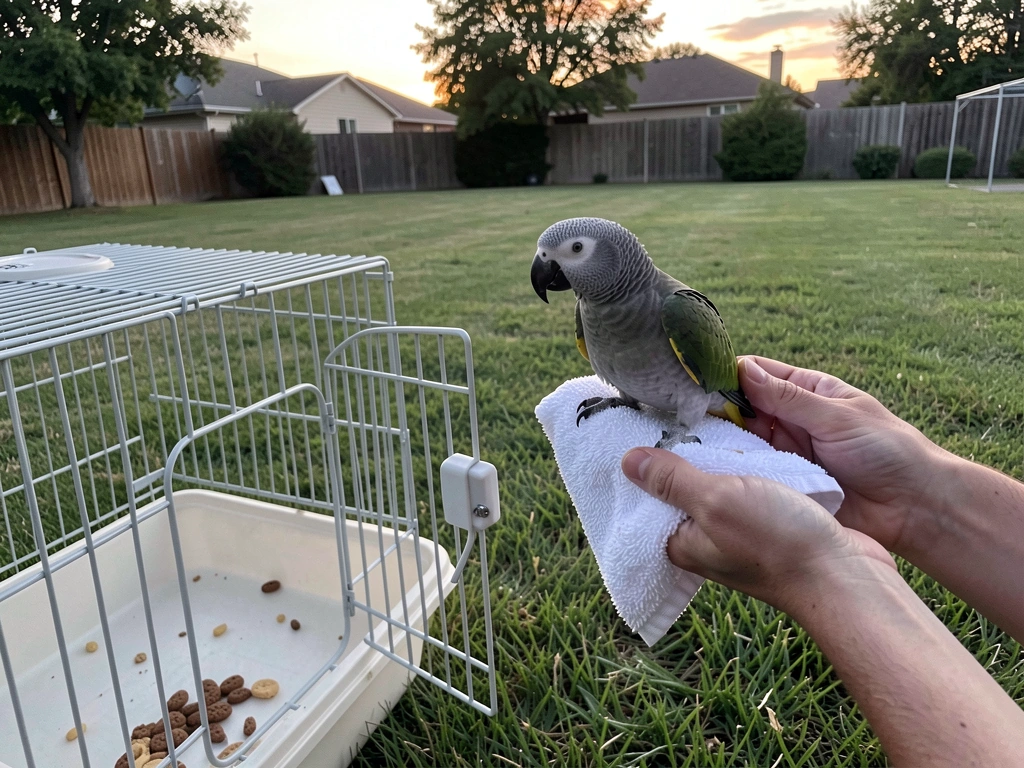
A small hand towel or lightweight cloth is your best hands-on capture tool. Approach slowly and calmly, keeping your movements deliberate and low. Toss the towel gently over the bird to temporarily disorient it and reduce its urge to flee, then use both hands to loosely cup the bird through the towel. Do not squeeze the body. Birds have rigid sternums and can suffocate if their chest is compressed. Hold the bird with just enough pressure to keep it from flapping, supporting its feet. Get it into a container as quickly as possible.
The carrier-and-guide method
Place a transport carrier or box with an open door directly in front of or near the bird, positioned so the bird is facing the opening. Then, from behind, use a large towel, a piece of cardboard, or even a broom held horizontally (not poked at the bird) to gently encourage the bird to walk or hop forward into the carrier. This works well for larger, grounded birds like waterfowl or injured raptors when you're waiting for wildlife help to arrive and need to contain the bird safely.
What not to do
- Do not use wire cages or glass aquariums for transport. The bird can injure itself on wire, and glass provides no airflow.
- Do not chase the bird repeatedly. Stop after two or three calm attempts and switch to a luring or containment strategy.
- Do not try to hand-catch a raptor, heron, or other large bird with sharp beaks or talons without proper training. Call a professional.
- Do not offer food or water to an injured wild bird unless a licensed rehabilitator tells you to.
Setting up the outdoor environment to work in your favor
Timing matters a lot. Birds are most calm and least likely to flee at dusk, especially waterfowl. If your pet bird or a bird needing help has roosted in a tree or on a structure, waiting until nearly dark gives you a much better window. Birds have poor night vision and are naturally less active, making them easier to approach and less likely to bolt.
Minimize distractions in the area. Ask other people to step back and stay quiet. Keep dogs and other animals inside. Foot traffic and noise are the biggest reasons a bird keeps flying just out of reach. The quieter and calmer the environment, the more likely the bird will settle in one spot long enough for you to act.
If the bird is in a tree or up high, don't try to climb up after it. That almost always causes the bird to fly further away. Instead, work at ground level to make coming down appealing, which brings us to the luring methods below.
Luring and guiding your pet bird back to you
This section is specifically for escaped pet birds. These techniques use familiar cues to draw the bird toward you rather than requiring you to catch it by force, and they are far more effective than chasing.
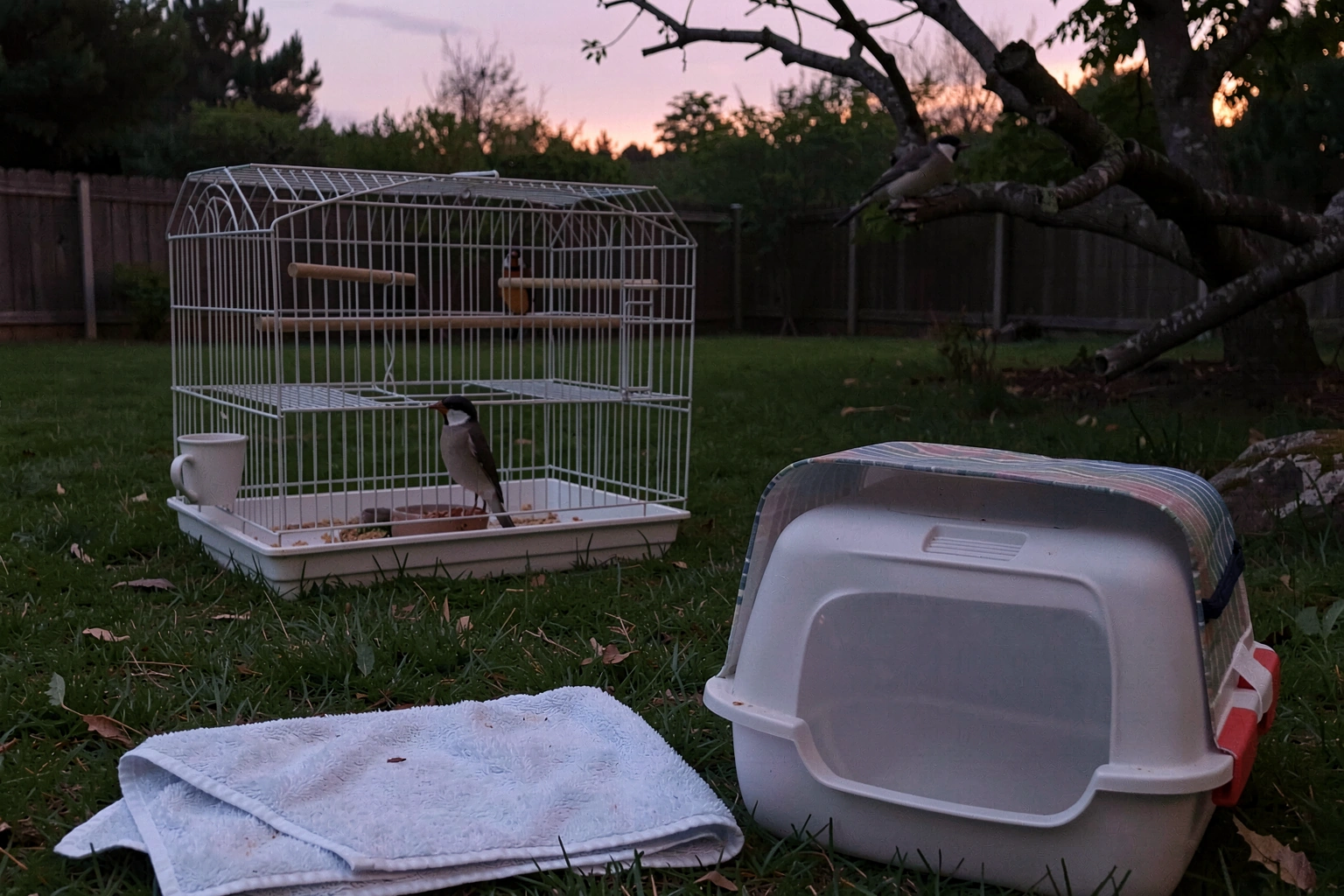
- Bring the bird's cage or play stand outside and place it in an open, visible spot near where the bird was last seen. Put its favorite food and treats inside, and leave the cage door open. Familiar smells, colors, and the sight of its own home are powerful attractants.
- If the bird has a companion bird at home, bring that bird outside in a separate, closed cage and place it near the open cage. The sound and sight of a known companion is one of the most effective lures for parrots, cockatiels, and parakeets.
- Play familiar sounds. If you have recordings of your bird's own voice, sounds from your home, or music it responds to, play them on a phone or speaker near the open cage. Many owners have called their bird back this way alone.
- Call the bird by name using its known words and phrases. Speak in the same tone and with the same words you normally use. Then stop talking and listen. An escaped pet bird will often call back, and that sound will tell you exactly where it is.
- Walk slowly in the direction of the bird's location, pausing frequently to call and listen. Do not run or move quickly. If the bird responds vocally, move toward the sound gradually.
- If the bird lands somewhere reachable, approach sideways rather than facing it head-on. Offer your arm or a familiar perch at the bird's chest height and use a calm, encouraging voice. Many pet birds will step up once they're tired and recognize their owner.
Patience is genuinely the most important tool here. Many escaped pet birds return on their own within a few hours, especially at dusk when temperatures drop and they want familiar surroundings. Set up the lure station, then give the bird time to come to it rather than actively pursuing it around the yard or neighborhood.
Once you've caught the bird: handling, transport, and immediate next steps
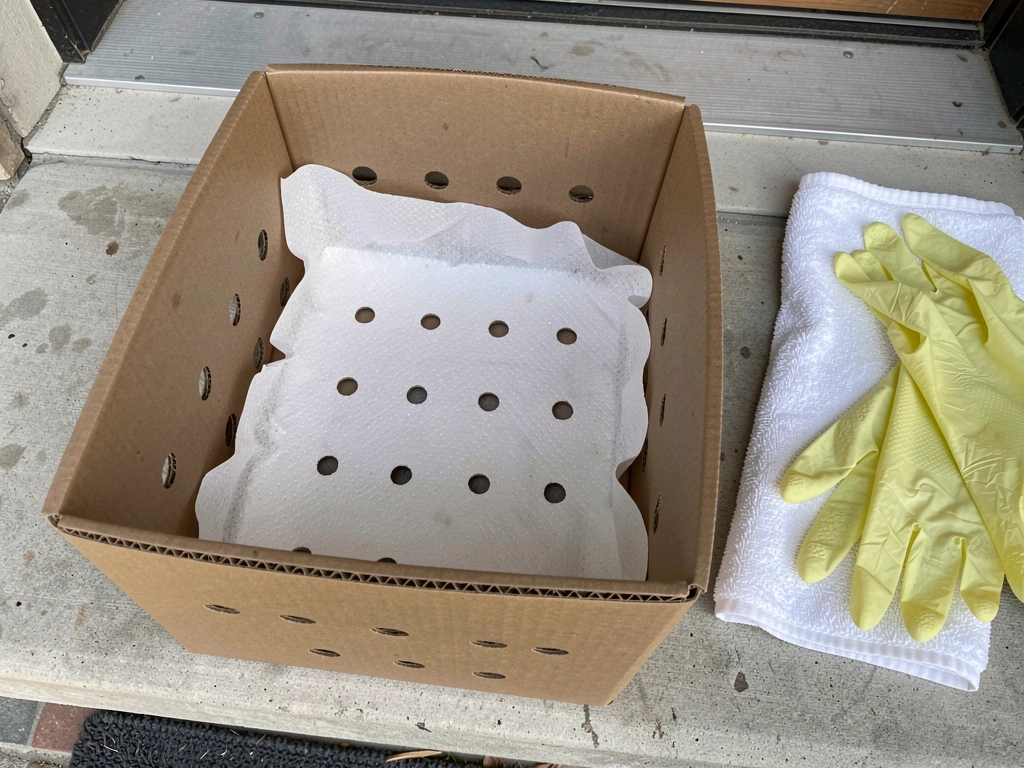
The moment you have the bird in your hands, the priority is getting it into a secure container as quickly as possible. For a pet bird, a travel carrier or even a pillowcase works temporarily. For a wild or injured bird, use a cardboard box that is roughly twice the size of the bird, with air holes punched in the top. Line it with a paper towel or thin cloth so the bird has something to grip.
Close or cover the container immediately. Darkness calms birds significantly and reduces flapping and stress. Do not peek in repeatedly to check on the bird. Place the container in a warm, quiet room away from pets, children, and noise while you figure out next steps. Do not put it in direct sunlight or in a car on a hot day.
For your own pet bird, do a quick visual check once it's contained: look for drooping wings, blood, discharge from the nostrils, labored breathing, or the bird holding one leg up. Even if the bird looks fine, a vet check after any outdoor escape is a smart move since exposure to wild birds or outdoor hazards can introduce health risks.
For a wild or injured bird, do not attempt to feed it or give it water. Place the box in a quiet, warm spot and call a licensed wildlife rehabilitator immediately. Most areas have a local or regional wildlife hotline. The American Bird Conservancy and Best Friends Animal Society both emphasize that getting the bird contained and into professional care quickly is the single most important thing you can do. Most rehabilitation centers do not provide pickup, so be prepared to transport the bird yourself.
After any handling of a wild bird, wash your hands thoroughly, change your clothes, and clean any surfaces the bird contacted. This is especially relevant given current HPAI concerns.
When to change your plan entirely
Sometimes what you're doing just isn't working, and continuing the same approach only makes things worse. Here are the clear decision points where you need to stop and shift strategies.
| Situation | What it means | What to do instead |
|---|---|---|
| Bird keeps flying away after 2-3 calm approach attempts | Chasing is increasing its stress, not helping | Stop. Set up a lure station and wait. Return at dusk. |
| Bird is clearly injured (drooping wing, bleeding, not standing) | It needs professional medical care, not just capture | Call a wildlife rehabilitator or animal control now. Contain if safe, then transport. |
| Bird is a large raptor, heron, or bird with sharp beak/talons | Serious injury risk to you and the bird | Call a licensed wildlife rehabilitator or local animal control. Do not attempt to grab it. |
| Pet bird has been out overnight or multiple days | It may have moved significant distance; standard luring may not reach it | Expand the search area, post on local lost pet boards with photo, contact local bird rescue groups and vets. |
| Bird appears healthy and wild with no signs of distress | This is a protected wild bird that does not need your help | Walk away. No action required or legally permitted. |
| Bird is showing neurological signs (head tilt, circling, seizure) | Possible disease or severe injury | Do not handle without gloves. Call animal control or a rehabilitator immediately and mention the symptoms. |
The Rocky Mountain Raptor Program and Ohio Wildlife Center both make the same point clearly: interaction and stress can be fatal to birds through capture myopathy. Knowing when to stop is not giving up. It is the right call for the bird's survival.
Your action plan for right now
- Identify the bird: Is it your pet, a neighbor's escaped bird, an injured wild bird, or a healthy wild bird? This determines every step that follows.
- If it's a healthy wild bird with no injury: do nothing. Leave it alone.
- If it's injured or clearly in distress: call your local wildlife rehabilitator or animal control hotline before touching it. Wear gloves if you must handle it.
- If it's your escaped pet: set up its cage or play stand with food and treats outside near its last known location, bring a companion bird if you have one, and play familiar sounds. Call its name and listen for a response.
- If you need to physically capture the bird: use a towel for a calm, gentle cover-and-cup approach, or use the carrier-and-guide method. Get it into a covered box or carrier immediately.
- After capture: keep the bird in a dark, quiet, warm container. For pets, call your vet. For wild or injured birds, contact a rehabilitator and transport it to them as soon as possible.
- If nothing is working after a few calm attempts: stop, reassess using the table above, and call a professional.
The situation feels urgent, and it is, but slow and calm always outperforms fast and frantic when it comes to birds. Take a breath, assess what you're actually dealing with, and follow the steps that match your situation. You've got this.
FAQ
What should I do first if I’m not sure whether the bird is injured or just calm on the ground?
Do not approach immediately. Stand back and watch for movement, breathing, and attempts to fly for a short period. If it does not rise or fly when you increase distance slowly, or it looks hunched, weak, or unable to stand, treat it as injured and call a wildlife rehabilitator rather than trying to capture it.
If the bird flies away when I get closer, does that mean it’s okay and I should walk away?
Usually yes for wild birds. If it can fly and behaves normally, continuing to pursue increases stress and risk of injury. Back away, reduce noise, and give it space, then reassess only if it shows clear injury signs.
How can I tell whether it’s a wild bird or my escaped pet bird before I take action?
Look for ownership cues. Pet birds often have bands, unusual color patterns for local wild species, or they respond to familiar sounds or routines like whistles, calls, or a specific perch location. If you can identify it as a pet, use lure and calm containment steps, not wildlife-capture tactics.
What is the best way to lure an escaped pet bird without making it more scared?
Use a quiet lure station near something familiar, like the bird’s cage, favorite perch, or known room entrance. Avoid chasing or cornering, keep other people at a distance, and use consistent cues (same call or treat routine) so the bird associates the sound with safety.
Can I use food to attract a wild bird?
In most cases, no. The article’s safest approach is to contain and call a licensed rehabilitator for injured wild birds, and to walk away for healthy wild birds. Even if a bird seems to accept food, feeding can delay proper care and can also create health or contamination risks.
If I need to place a carrier near the bird, how close should I get?
Place the open carrier near the bird facing the opening, but keep your body movement minimal and stay back enough that it is not escalating flapping or attempts to bolt. Move the carrier only if you can do it without advancing toward the bird in a way that triggers panic.
What should I do if I can’t get the bird into a towel or carrier after a few attempts?
Stop and switch strategies. The article emphasizes that continued pursuit can lead to fatal stress conditions. Common next steps include changing the time of day, lowering noise and foot traffic, trying a different direction of approach (from behind to guide walking), or calling for help if the bird is wild or injured.
Is it ever appropriate to try to catch a bird bare-handed if it seems easy?
Not for wild birds. Even if it looks tame, you risk causing stress and potential exposure. For any handling, use the towel or cloth method to avoid direct contact and to keep the bird’s chest from being compressed.
How should I handle a bird that’s perched high in a tree and won’t come down?
Avoid climbing after it, since that often makes it fly further away. Work from ground level to make coming down appealing, reduce distractions, and wait for a calmer window, especially near dusk, while you guide instead of forcing movement.
What should I do immediately after securing the bird in a container?
Cover or close the container promptly. Keep it in a warm, quiet room away from pets, children, and noise, and avoid repeated checking. If it is a pet, do a quick visual health scan once contained, then arrange a vet visit after an outdoor escape.
If I handled a wild bird, do I need to quarantine the bird or sanitize differently?
Sanitize thoroughly. The article recommends washing hands, changing clothes, and cleaning surfaces the bird contacted, especially given avian flu concerns. For the bird’s next steps, do not feed or water a wild or injured bird, and prioritize contacting a licensed rehabilitator.
Should I open the container to check on the bird if it’s moving a lot?
Avoid frequent peeking. If the bird is flapping or reacting, darkness and reduced stimuli help it settle. Check only as needed for safety decisions, then return it to quiet conditions, since repeated opening can reset stress levels.
What if the bird is dead or clearly dying when I find it?
Treat it as a handling risk. Wear disposable gloves, avoid touching your face, and follow the same decontamination steps after contact. If it is a wild bird, contact local wildlife authorities or a rehabilitator so they can advise on next steps for avian disease precautions.
Next Article
How to Catch a Bulbul Bird: Legal, Humane Steps Today
Humane, legal steps to catch bulbul birds: bait, timing, trap setup, safe check, and nonharm alternatives.